









News


 电商部
电商部  2026-04-07 15:20:25
 Industrial Motherboard Memory Compatibility: How to Fix Detection and Stability Issues
When replacing or upgrading memory in industrial equipment, compatibility issues often arise. These problems typically stem from frequency, timing, voltage, or rank mismatches.
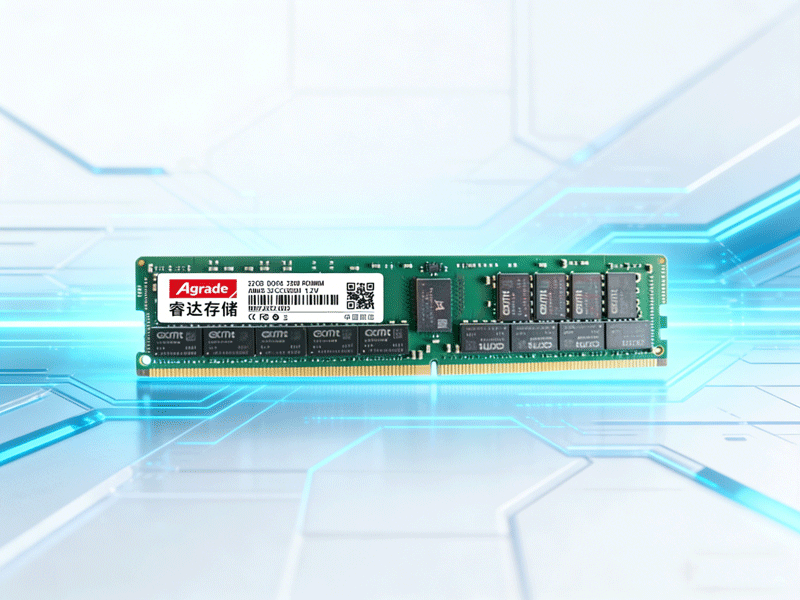
1. Frequency Compatibility
Memory rated frequency (e.g., 3200MHz) is the maximum operating speed. Actual frequency is determined by the motherboard. If the motherboard only supports 2666MHz, a 3200MHz module will down-clock automatically. However, some industrial motherboards have poor support for high-frequency memory.
Solution: Consult the motherboard manual for supported frequency ranges. Choose memory matching the motherboard's native frequency.
2. Timing Compatibility
Timing parameters (CL-tRCD-tRP-tRAS) represent memory latency. Motherboards automatically select timings from SPD. However, some industrial motherboards have narrow timing tolerance.
Solution: Choose modules with lower CL values (better compatibility). If unstable, manually relax timings in BIOS.
3. Voltage Compatibility
DDR3, DDR4, and DDR5 use different voltages and are not interchangeable. Even within the same generation, standard and low-voltage versions exist.
Solution: Verify motherboard voltage requirements in the manual. Select matching memory.
4. Rank Configuration
Some industrial motherboards have limitations on rank count:
Single/Double Sided: Some legacy boards only support single-sided modules
Rank Count: Motherboards may have maximum rank limits (e.g., 2 ranks per channel)
5. Compatibility Testing Recommendations
Test sample modules on target motherboards before mass purchase
Run MemTest86 or similar tools for at least 24 hours
Document test temperatures to ensure they cover actual operating conditions

-
Products
Advantages
-
Solutions
-
News
About us
-
Contact us
Tel:+86 19926658803
Whatsapp:+86 19926658803
lianle1210@163.com
Address: 30CF, Caihong Building, Caihong Road, Futian District, Shenzhen City, Guangdong Province, China



Friendly Links:
