









News


 电商部
电商部  2026-03-30 16:35:38
 Power-Loss Protection (PLP): Why Industrial CF Cards Need It
In industrial environments, unexpected power failures are common—whether from a disconnected cable, a tripped breaker, or a vehicle’s ignition cycle. Without power-loss protection (PLP), these events can corrupt data or render the file system unusable.
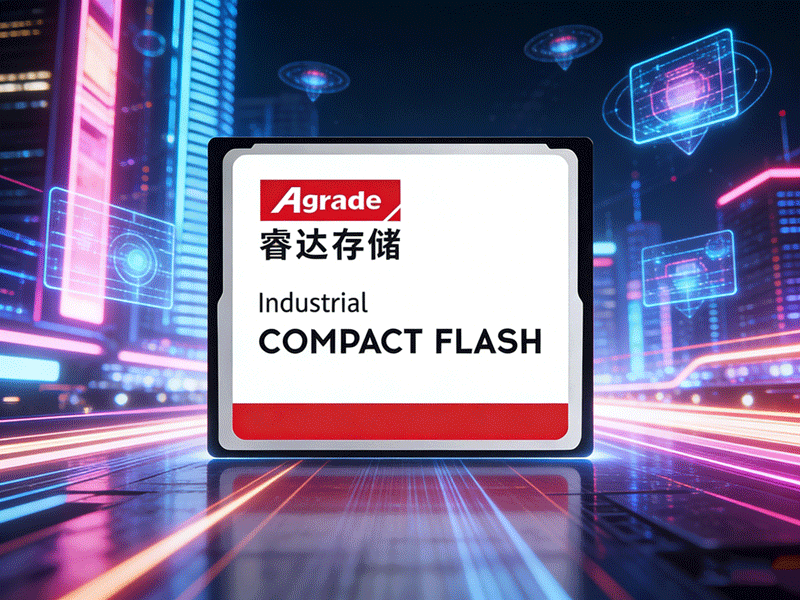
1. How Power-Loss Protection Works
Industrial CF cards integrate small but effective energy storage components—typically tantalum capacitors—that provide sufficient backup power for 50–100 milliseconds after main power is lost. During this window, the controller performs three critical tasks:
Flushes any data held in the volatile cache to the NAND flash.
Completes any ongoing write operation, ensuring file system metadata is updated.
Places the NAND in a safe state, preventing partial programming.
2. Quantified Reliability Improvements
Controlled testing reveals stark differences:
Industrial cards with PLP: File system corruption rate below 0.1% after 1,000 random power interruptions.
Consumer cards (no PLP): Corruption rates exceeding 30% under identical conditions.
3. Applications That Demand PLP
CNC Machines: Program and parameter integrity must survive facility power events.
Medical Monitors: Patient data cannot be lost during accidental unplugging.
Industrial Controllers: Logic programs and recipe data are critical.
4. Verifying PLP
Not all cards marketed as “industrial” include true PLP. Check the datasheet for explicit mention of “power-loss protection” or “capacitor backup.” For critical installations, request test data from the manufacturer.

-
Products
Advantages
-
Solutions
-
News
About us
-
Contact us
Tel:+86 19926658803
Whatsapp:+86 19926658803
lianle1210@163.com
Address: 30CF, Caihong Building, Caihong Road, Futian District, Shenzhen City, Guangdong Province, China



Friendly Links:
