




News


 电商部
电商部  2026-04-14 11:56:19
 SLC vs. pSLC vs. Industrial 3D TLC: Which NAND Flash Is Best for Industrial SSDs?
The type of NAND flash inside an industrial SSD dictates its lifespan, performance, and cost. Understanding the trade-offs is essential for informed selection.
1. SLC (Single-Level Cell)
SLC stores one bit per cell, offering the highest endurance—100,000 program/erase cycles. Write speeds are stable, and data retention exceeds 10 years. Applications: aerospace, military systems, medical implants, and nuclear control equipment where failure is not an option. Cost is premium; capacities typically ≤64GB.
2. pSLC (Pseudo SLC)
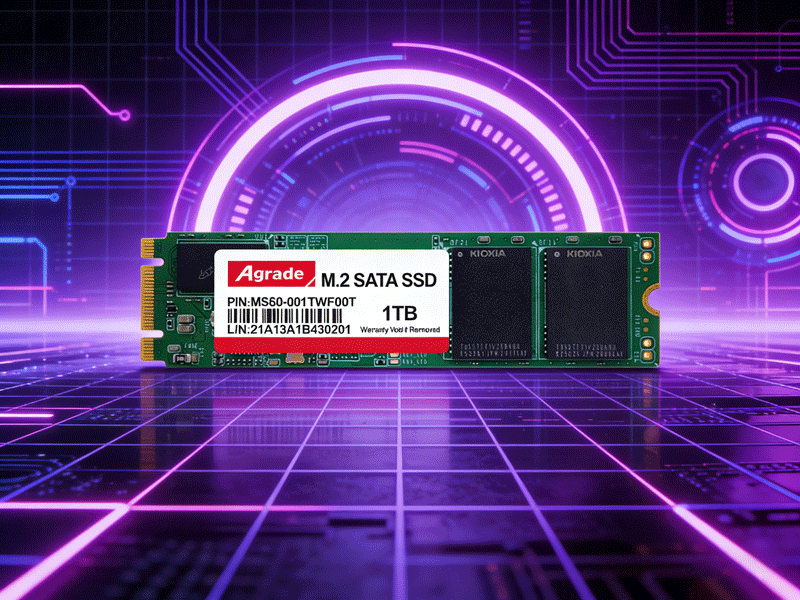
pSLC configures MLC or TLC flash to operate in single-bit mode via firmware, boosting endurance to 30,000-50,000 cycles while costing 50-70% less than SLC. Performance approaches native SLC, but capacity is halved or quartered. Applications: industrial robotics, railway systems, CNC machines, and high-frequency logging.
3. Industrial 3D TLC (Triple-Level Cell)
Modern industrial 3D TLC uses 3D NAND stacking (64/128 layers) and LDPC error correction to achieve 3,000-10,000 cycles—far exceeding consumer TLC. It offers the lowest cost per gigabyte and the widest capacity range (up to 8TB). Applications: surveillance systems, digital signage, IoT edge devices, and cost-sensitive projects.
4. Selection Framework
Mission-Critical: SLC required
High Write Load: pSLC recommended
Moderate Write Load: Industrial 3D TLC sufficient
Read-Intensive: 3D TLC adequately meets requirements
Always request NAND type confirmation from suppliers and verify with flash identification tools.

-
Products
Advantages
-
Solutions
-
News
About us
-
Contact us
Tel:+86 19926658803
Whatsapp:+86 19926658803
lianle1210@163.com
Address: 30CF, Caihong Building, Caihong Road, Futian District, Shenzhen City, Guangdong Province, China



Friendly Links:
